


Publications
Multiple system atrophy: cure and care
This review provides an updated overview of multiple system atrophy, focusing on recent advances in disease mechanisms, diagnostic criteria, biomarkers, and therapeutic strategies. It also discusses current approaches to symptom management and emerging models of multidisciplinary and patient-centred care.
https://pubmed.ncbi.nlm.nih.gov/42501123/
Shortened olfactory identification testing to differentiate parkinsonian syndromes
Three of 8 identified abbreviated SS-I tests (including seven odors or more) retained diagnostic value for distinguishing PD from APD in our independent cohort.
https://pubmed.ncbi.nlm.nih.gov/42259079/
The Utility of Olfactory Testing to Discriminate Parkinson’s Disease From Diagnostic Mimics: A Systematic Review and Meta-Analysis
Our findings indicate that olfactory testing shows moderate to good diagnostic accuracy in differentiating PD from its main differential diagnoses. While results of olfactory testing alone are insufficient for a definite distinction of PD from non-PD parkinsonism, they represent an easy-to-use and inexpensive test that may be used in combination with other diagnostic tools.
https://pubmed.ncbi.nlm.nih.gov/41467596/
MeDeMSA care study protocol: developing personalized best medical care with integrated mobile palliative and telemedicine support for individuals with multiple system atroph
This study evaluates an 18-month personalized multidisciplinary care program for people with multiple system atrophy, integrating palliative care, rehabilitation, and telemedicine. The project assesses its impact on patients’ quality of life, acceptability, safety, and cost-effectiveness, while also exploring the impact of the disease on caregivers and their burden.
https://pubmed.ncbi.nlm.nih.gov/40411588/
Tremor in Multiple System Atrophy
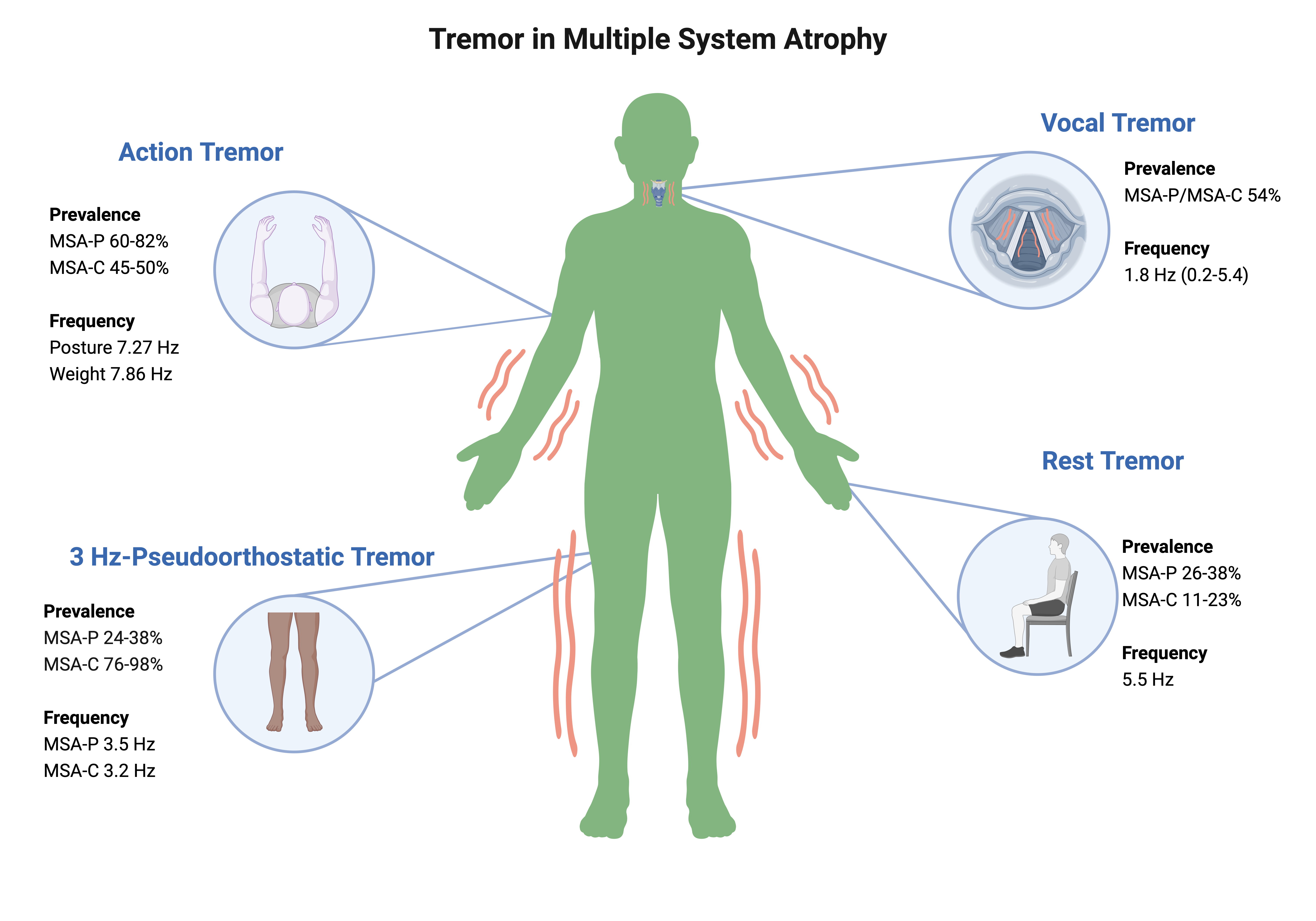
In this systematic literature review, we report the synthesized findings of articles describing tremor in multiple system atrophy within the last 13 years. Drawing from data from 963 individuals with MSA, we learned that tremor is common in MSA but clinically heterogeneous, with distinct patterns across disease subtypes. Action tremor predominates, while low-frequency pseudo-orthostatic tremor appears characteristic of the cerebellar subtype. The review highlights the diagnostic relevance of detailed tremor characterization and the overall limited, variable response to current symptomatic treatments.
https://dx.doi.org/10.1007/s00702-026-03129-9
New Publication: Multidisciplinary MSA Care
While the search for biomarkers and disease-modifying therapies continues, people living with MSA need the best possible care — to preserve autonomy, maintain quality of life, and prevent serious complications.
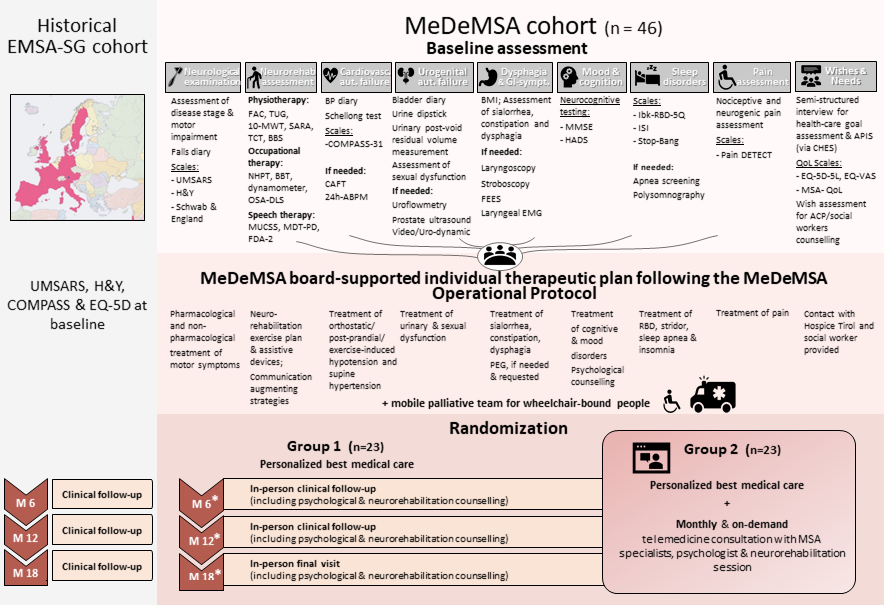
The MeDeMSA Care study presents a multidisciplinary, personalized care model, complemented by telemedicine and mobile palliative support. It truly takes a village to care for people with MSA — including neurologists, other medical specialists, physiotherapists, speech and occupational therapists, psychologists, pain and palliative care experts, and professionals in healthcare ethics and health technology assessment.
We believe that science should be as open as possible. That’s why we are sharing our operational and neurorehabilitation protocols in detail — to foster collaboration and support the development of similar care structures elsewhere.
👉 Read the full publication and access all supplementary materials here: https://link.springer.com/article/10.1007/s00702-025-02933-z
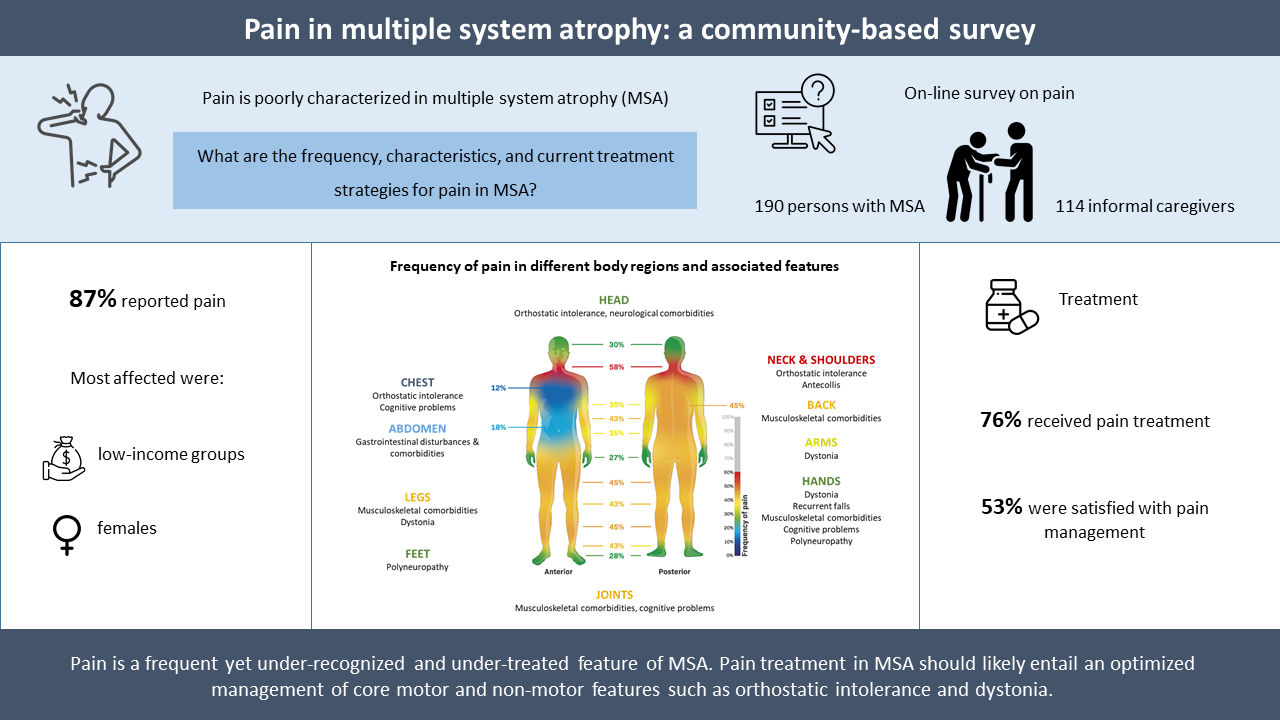
Pain in MSA: A Community-Based Survey
In this community-based study, we learned that 87% of people with MSA suffer from pain, but many of them are left alone to deal with it. Importantly, in certain body regions, pain is associated with treatable conditions such as orthostatic hypotension or dystonia, highlighting important areas of intervention for pain relief.
Advance care planning in MSA
Advance care planning can be difficult to engage in, but it is important to make sure that health care provision towards the end of life aligns with the personal wishes and preferencies. In this viewpoint, the MeDeMSA team reflects on frequent barriers encountered by MSA individuals, caregivers and healthcare providers and ways how to overcome them:
https://link.springer.com/article/10.1007/s10286-024-01049-w
A 6-item score for early MSA-P
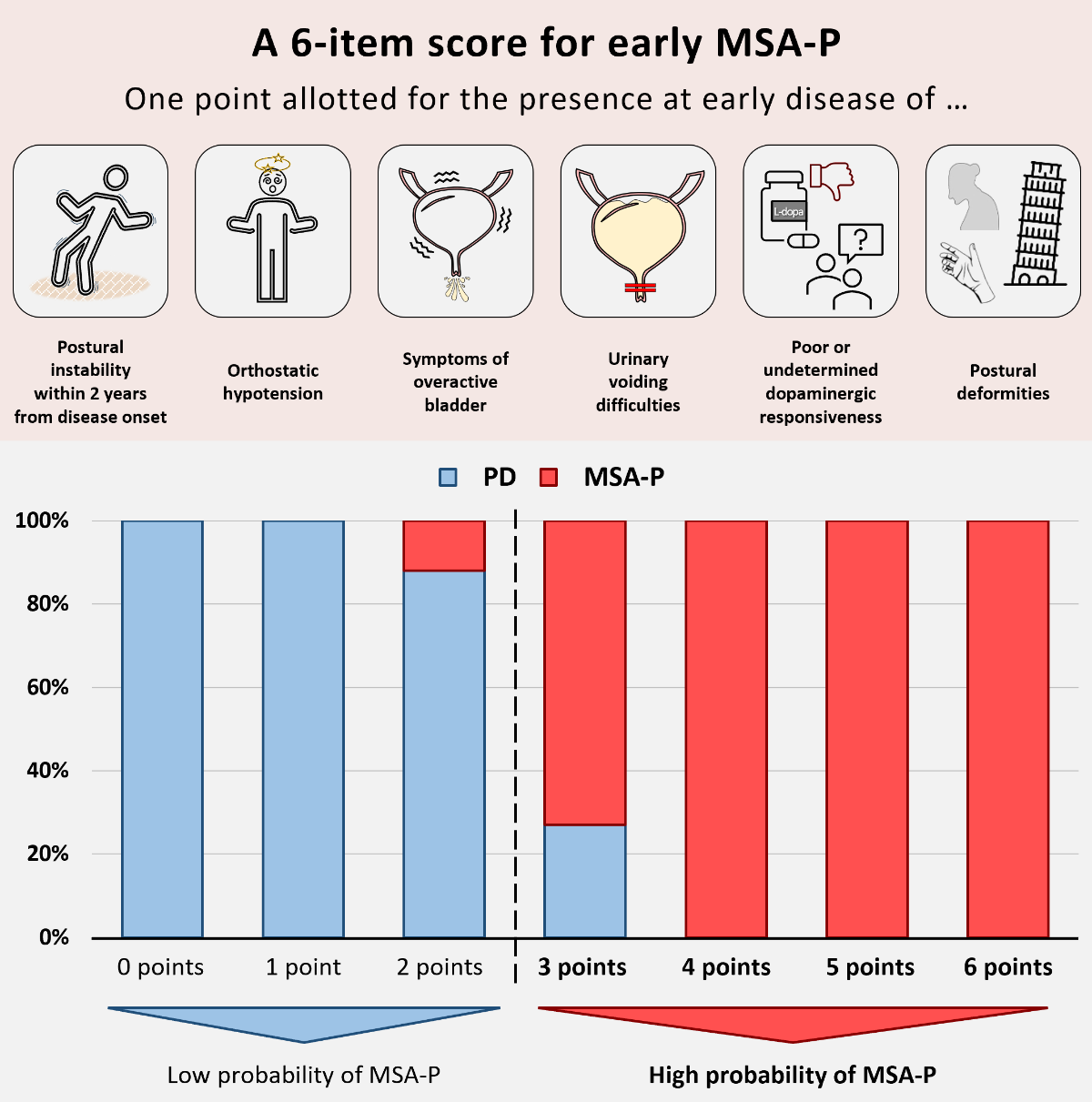
Despite technological progress, MSA is often diagnosed four to five years into the disease course. This is a major hurdle for a timely engagement in clinical trials with disease-modifying candidate drugs. In this cooperation with the amazing Tel Aviv and Belgrade teams, we developed a bedside 6-items score to early identify people at high risk of suffering from the parkinsonian variant of MSA.
Read more under: https://doi.org/10.1002/mdc3.14048
Do men and women differ? Of course they do.
Does this impact on the clinical presentation of MSA? In fact it does Read more in this paper by Dr Fabian Leys and the Innsbruck team: https://rdcu.be/dFrPj
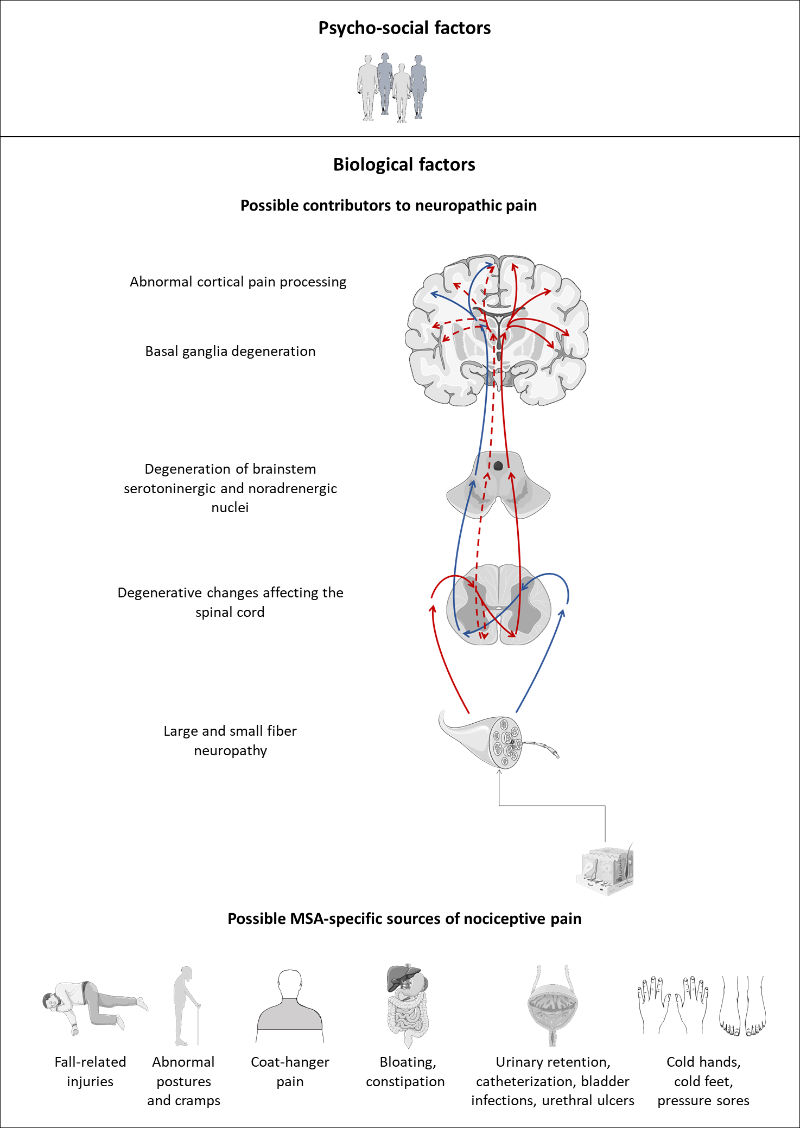
Pain in MSA
Two out of three persons living with MSA experience pain, but only half of them receive any kind of targeted treatment. Here we reviewed the current understanding of pain in MSA and highlighted the key unmet needs to address next: Pain in Multiple System Atrophy a Systematic Review and Meta‐Analysis – Campese – 2023 – Movement Disorders Clinical Practice – Wiley Online Library